
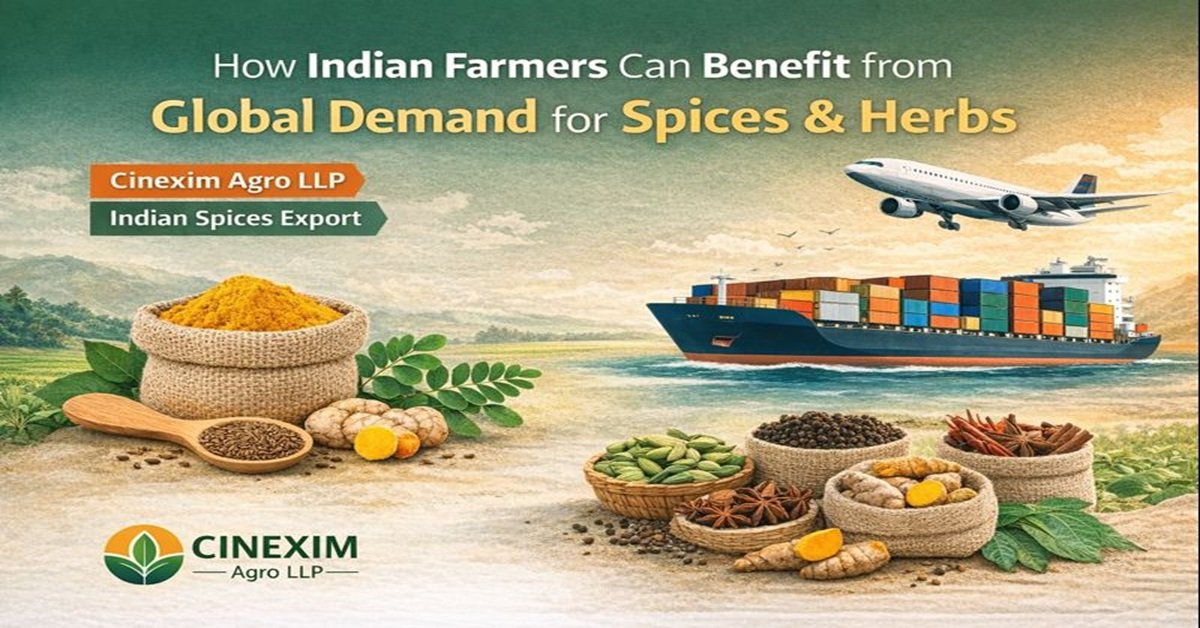
India has been known for centuries as a global hub for spices and medicinal herbs. From turmeric and ginger to basil, cumin, and ashwagandha, Indian spices and herbs are valued worldwide for their quality, aroma, and health benefits. Today, with rising awareness around natural foods and wellness, the global demand for spices and herbs is growing faster than ever.
This shift has created strong export opportunities for farmers in India. With the right farming practices, quality focus, and support from export-oriented companies, Indian farmers can move beyond local markets and actively participate in agri exports from India.
Rising Global Demand for Indian Spices & Herbs
International markets such as the USA, Europe, the Middle East, and Southeast Asia are increasingly importing spices and herbs from India. Buyers are looking for products that are natural, safe, traceable, and produced under consistent quality standards. Turmeric is widely used for its medicinal value, ginger for immunity-based products, and herbs like moringa and tulsi for health supplements and nutraceutical applications.
India’s strength lies in its climatic diversity and deep-rooted agricultural knowledge. However, modern export markets now focus not only on quantity but also on export quality standards for spices, proper post-harvest handling, and reliable supply chains. This is where structured collaboration between farmers and exporters becomes essential.

High-Potential Spices & Herbs for Export
Several crops offer excellent potential for herbs export from India and spice exports when grown with export requirements in mind. Turmeric, ginger, cumin, and coriander continue to see strong international demand. Herbs such as basil, ashwagandha, and moringa are also gaining importance in pharmaceutical, wellness, and nutraceutical industries.
For farmers, it is advisable to focus on one or two crops with steady export demand rather than cultivating many crops at once. This focused approach helps maintain consistent quality and improves acceptance in the export market for spices and herbs.
Quality Standards Required for Export Markets
One of the key differences between domestic sales and exports lies in quality expectations. Export buyers expect clean, residue-free produce that complies with food safety norms. Proper harvesting at the right maturity stage, hygienic drying methods, and safe storage conditions are essential for success in agri exports from India.
Basic compliance such as food safety registration and APEDA linkage builds trust with international buyers. While many farmers initially view certifications as complex, these requirements actually help them access better buyers and more stable pricing. Understanding APEDA registration for exporters and following basic quality norms is a crucial step toward long-term export growth.
Role of Exporters in Supporting Farmers
Farmers do not need to manage international buyers, export documentation, logistics, or compliance on their own. Most successful agri exports are built on collaboration between farmers and experienced exporters. Export companies handle buyer communication, quality checks, packaging, documentation, and logistics, allowing farmers to focus on cultivation and quality improvement.
Cinexim Agro LLP works closely with Indian farmers and producer groups to source export-quality spices and herbs while ensuring alignment with global standards. By acting as a bridge between farms and international markets, Cinexim Agro LLP supports farmers with market insights, compliance guidance, and structured sourcing practices—helping reduce risk and create reliable export opportunities.
How Farmers Can Start Export-Oriented Farming
The journey toward export-oriented farming begins with awareness and gradual improvement. Farmers can start by understanding how farmers can export agricultural products through partnerships with exporters or Farmer Producer Organizations (FPOs). Selecting crops with export demand, following good agricultural practices, and learning basic quality expectations are practical first steps.
With support from export-focused companies like Cinexim Agro LLP, farmers can better understand market requirements and gradually align their production with export needs. Even small improvements in post-harvest handling, drying, and storage can significantly improve acceptance in global markets.
Value Addition in Agri Exports
Value addition in agri exports plays a major role in increasing farmer income. Raw agricultural produce usually earns lower margins compared to processed or semi-processed products. For example, dried turmeric or turmeric powder fetches higher prices than raw turmeric, while dried herbs are more suitable for export due to longer shelf life.
Exporters often assist farmers by managing processing, packaging, and quality compliance, ensuring that final products meet international standards and buyer preferences. This collaboration enables farmers to benefit from global value chains without bearing the entire burden of export operations.
Indian Farmers as Global Trade Partners
The future of Indian spices export depends on strong partnerships between farmers and exporters. When farmers understand export quality expectations and exporters provide market access, technical guidance, and compliance support, Indian agricultural products can compete confidently on the global stage.
With the right guidance and collaboration—supported by experienced export partners like Cinexim Agro LLP—Indian farmers can evolve from local suppliers into reliable global trade partners, benefiting from better prices, stable demand, and long-term growth.