
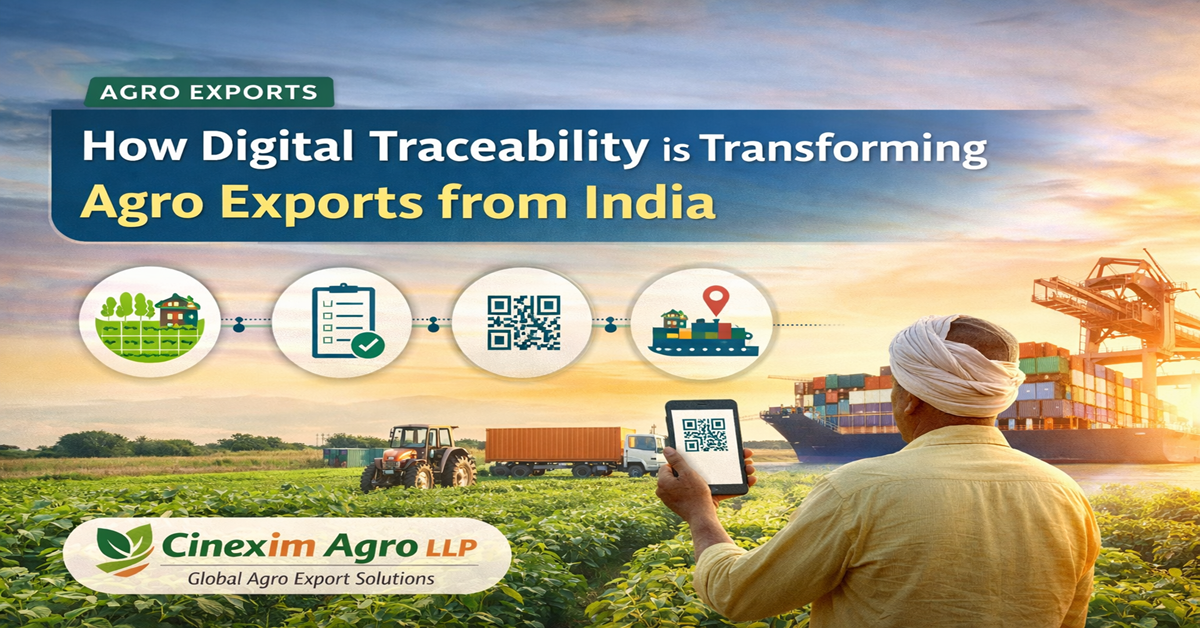
India is a country of farmers. Our rice, pulses, spices, fruits, and vegetables are sold not only in local mandis but also in many foreign countries. Earlier, buyers mostly cared about quality and price. But now, international buyers also want to know where the product was grown, how it was handled, and whether it is safe.
This is why digital traceability is becoming very important in agro exports.
In simple words, buyers want to see the full story of the product before they purchase it.
What is Digital Traceability in Agro Exports?
Let us understand this with a simple example.
Suppose a farmer in Maharashtra grows turmeric. The crop is harvested, cleaned, packed, and then exported to a buyer in Europe. Now the buyer wants to know which farm produced it, whether proper farming methods were used, and whether pesticide levels are safe.
Digital traceability records all this information step by step. It stores details such as farm location, harvest date, processing unit, and shipment details in a digital system.
Some exporters even print a QR code on the package. When scanned, it shows complete product information. This makes the supply chain clear and trustworthy.
Why International Buyers Demand Traceability
Many countries follow strict food safety rules. In India, organizations like APEDA and Food Safety and Standards Authority of India help maintain export standards. Importing regions such as the European Union have very strict limits on pesticide use and food safety.
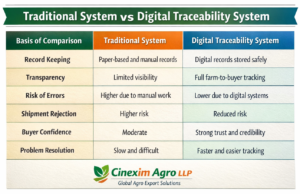
If a shipment does not meet their standards, it can be rejected. This causes heavy losses to exporters and sometimes even farmers.
When proper digital records are maintained, it becomes easy to show proof that the product meets required standards. This reduces risk and builds confidence.
How Digital Traceability Benefits Indian Farmers
Many farmers think digital systems are only for big companies. But in reality, farmers benefit greatly.
When a farmer becomes part of a proper export supply chain, he or she gets access to better markets. Foreign buyers often pay higher prices for products that come with verified records.
For example, if a farmer keeps proper records of pesticide use and follows correct farming practices, the exporter can show this information to the buyer. This increases trust and reduces chances of rejection.
Over time, farmers connected with exporters get stable demand and better income compared to selling only in local markets.
Role of Export Companies in Digital Traceability
Export companies act as a bridge between farmers and foreign buyers. They collect produce, check quality, maintain records, and manage shipment.
Companies like Cinexim Agro LLP understand that today’s global market demands transparency and proper documentation. By building organized systems and maintaining accurate records, exporters can protect farmers’ interests and strengthen India’s image in global trade.
When exporters invest in digital systems, they create a reliable chain that benefits everyone involved.
Technology Used in Digital Traceability
Technology may sound complicated, but it simply means using software to store and manage information properly.
Exporters use digital systems to record purchase details, stock information, and shipment tracking. QR codes help buyers quickly check product history. In the case of fruits and vegetables, temperature monitoring devices help maintain freshness during transportation.
All these tools work together to reduce mistakes and improve trust.
Challenges in Implementation
There are some challenges in adopting digital systems. Small farmers may not be familiar with technology. Setting up new systems can require investment and in rural areas, internet access can sometimes be limited.
However, awareness is increasing. With training and support, farmers and exporters are slowly adapting to digital systems. Over time, these systems will become common in agro exports.
Future of Digital Agro Exports in India
The future of agro exports depends on trust and transparency. Consumers abroad want safe and responsibly sourced food. They want to know the origin of what they eat.
Very soon, digital traceability will not be optional. It will become necessary for exporters who want to compete internationally.
Farmers and exporters who adapt early will benefit the most.
Conclusion
Digital traceability is improving agro exports from India in many ways. It builds trust, reduces rejection risk, and helps farmers earn better income. It also gives foreign buyers confidence in Indian products.
As global standards continue to become stricter, adopting digital systems is important for long-term success. Export-focused companies such as Cinexim Agro LLP, which emphasize structured sourcing and proper documentation, are helping build a stronger and more transparent agro export ecosystem in India.
📞 Partner With a Reliable Agro Exporter
If you are a farmer looking to connect with international markets, or a global buyer searching for trusted Indian agro products, partnering with a compliance-focused exporter makes all the difference.
Cinexim Agro LLP is committed to quality, transparency, and responsible sourcing. With structured processes and a strong understanding of global trade requirements, we aim to create long-term partnerships that benefit farmers and buyers alike.
For business inquiries, sourcing partnerships, or export collaborations, connect with Cinexim Agro LLP and grow together in the global agro market.